Mobile Welding in Dallas-Fort Worth: Oil, Ranches, and On-Site Repair
DFW is one of the fastest-growing metros in America, and its demand for mobile welding spans oil fields, cattle ranches, and a massive construction boom. Here is what to know about hiring a mobile welder in North Texas.
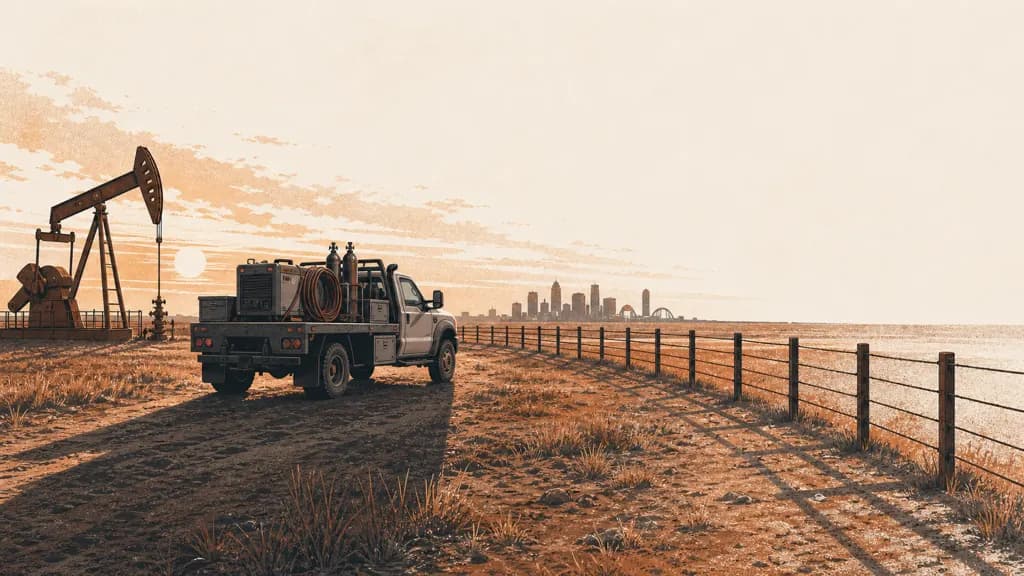
Why Dallas-Fort Worth Is a Mobile Welding Hotspot
The Dallas-Fort Worth metroplex is the fourth-largest metro area in the United States, with a population exceeding 8 million and an economy that runs on energy, agriculture, construction, and logistics. Every one of those industries depends heavily on welding, and in a region this spread out, mobile welding is not a luxury but a necessity.
From the Permian Basin pipeline infrastructure that feeds into the DFW corridor to the cattle ranches of Wise and Parker Counties, from the high-rise construction cranes dotting Uptown Dallas to the trailer-packed logistics yards in Alliance, North Texas keeps mobile welders busier than almost anywhere else in the country.
Oil and Gas Field Welding in North Texas
Texas produces more oil and natural gas than any other state, and the Barnett Shale formation runs directly beneath the DFW metroplex. While the heaviest drilling activity is in West Texas and the Eagle Ford, the pipeline infrastructure, compressor stations, and processing facilities that serve the Barnett extend throughout Tarrant, Denton, Johnson, and Wise Counties.
Mobile welders in DFW who serve the oil and gas sector typically carry API 1104 certification: the American Petroleum Institute standard for pipeline welding. API 1104 qualification requires passing destructive testing on pipe welds in multiple positions and is considered one of the more demanding certifications in the trade. Pipeline welders in the DFW corridor earn $40-$60 per hour as employees and significantly more as independent contractors running their own rigs.
Common oil and gas mobile welding jobs in the DFW area include:
- Pipeline tie-ins and repair welds on gathering lines
- Compressor station structural steel and pipe support repairs
- Tank battery maintenance and modifications
- Wellhead equipment repairs and modifications
- Facility fencing and access gate fabrication
The Texas Railroad Commission oversees oil and gas operations in the state, and any welding on pressure-containing pipeline components must meet their regulatory requirements in addition to API and ASME standards.
Ranch and Agricultural Welding
Step thirty minutes outside the DFW urban core in any direction and you are in ranch country. Denton, Wise, Parker, Ellis, and Kaufman Counties are home to thousands of working cattle ranches, horse operations, and row-crop farms, all of which generate constant demand for mobile welding.
Typical ranch welding jobs include:
- Livestock gate and panel repair. Cattle gates take a beating. A 1,200-pound bull pushing through a panel bends steel that needs straightening or replacing. Mobile welders who serve ranches carry extra lengths of 2" square tubing and gate hardware as standard stock.
- Fence post and pipe fence repair. Pipe fencing is ubiquitous in North Texas. Welding cracked or bent pipe fence sections is a weekly call for many rural mobile welders.
- Trailer repair. Stock trailers, flatbeds, gooseneck trailers. Ranches run on trailers, and trailers break. Cracked tongues, bent frames, broken floor crossmembers, and worn coupler assemblies are the bread and butter of agricultural mobile welding.
- Equipment repair. Tractor implements, hay spears, bucket edges, brush hog decks. When a piece of farm equipment breaks during the workday, a mobile welder who can be on-site within an hour saves the operation from losing an entire day.
- Custom fabrication. Cattle chutes, loading ramps, hay rings, feed troughs. Many ranchers need custom-built equipment designed for their specific layout and herd management approach.
DFW Construction Boom
Dallas-Fort Worth has led the nation in construction permits for several consecutive years. The metroplex is adding office towers, distribution centers, residential developments, and infrastructure at an extraordinary pace. Frisco, McKinney, Celina, and the northern suburbs are among the fastest-growing cities in the country.
This construction boom drives enormous demand for mobile welding:
- Structural steel connections. AWS D1.1 certified welders are in high demand for steel-frame commercial buildings, requiring field connections that cannot be made in the fabrication shop.
- Rebar and embed welding. Concrete construction requires welded rebar cages and embedded steel plates for anchor connections.
- Handrail and guardrail installation. Commercial buildings require code-compliant metal railings, often fabricated on-site for exact fit.
- Miscellaneous metals. Stair stringers, equipment platforms, bollards, and security barriers are frequently welded on-site during construction.
Texas Licensing Requirements
Texas does not require a state-level welding license for general welding work. However, several regulatory frameworks apply:
- Texas Department of Licensing and Regulation (TDLR). Oversees contractor licensing. While welding itself is not separately licensed, welders performing structural work on buildings may need to work under a licensed general contractor or structural steel contractor.
- Municipal permits. Dallas, Fort Worth, Arlington, and most suburban cities require building permits for structural welding on commercial and residential properties. The welding must be inspected and may require the welder to demonstrate AWS D1.1 qualification.
- Sales tax. Mobile welders in Texas must collect and remit sales tax on labor and materials for non-exempt jobs. Agricultural welding is often exempt from sales tax under the Texas agricultural exemption, but the welder should verify the customer's ag exemption certificate.
- The Texas Welding Society. A chapter of the American Welding Society, the Texas Section hosts certification testing events throughout the state and is a resource for welders seeking to earn or renew AWS credentials.
What Mobile Welding Costs in DFW
The DFW market is competitive, which keeps pricing reasonable despite high demand:
- Hourly rates: $85-$140/hour for general mobile welding; $125-$200/hour for certified structural or pipe welding
- Service call minimums: $175-$300 depending on distance from the welder's base
- Common job ranges: Gate repair $200-$500; trailer repair $250-$700; ranch fence work $300-$800; structural steel $500-$2,500+
The DFW metro's sprawl means drive time is a real factor. A welder based in Weatherford driving to Rockwall is covering 80+ miles. Expect the trip charge to reflect that. For the best pricing, hire a welder based near your location.
Finding a WeldRunners in Dallas-Fort Worth
DFW has no shortage of mobile welders, but quality varies widely. Look for welders who specialize in your type of work: a ranch welder and a structural steel welder are very different skill sets. Check for insurance, ask about certifications relevant to your job, and get a written quote before work begins.
WeldRunners lists mobile welders across the DFW metroplex, from downtown Dallas to the rural reaches of the Barnett Shale. Search by location, review the published profile, and contact providers directly. Directory listings are not endorsements, so confirm job-specific qualifications and current documentation yourself.