Mobile Welding in Phoenix & the Valley: Desert Heat and Metal Work
Phoenix and the greater Valley of the Sun present unique challenges for mobile welders: extreme heat, UV exposure, and a booming population that needs everything from pool fences to RV repairs. Here is the guide to mobile welding in the Phoenix metro.
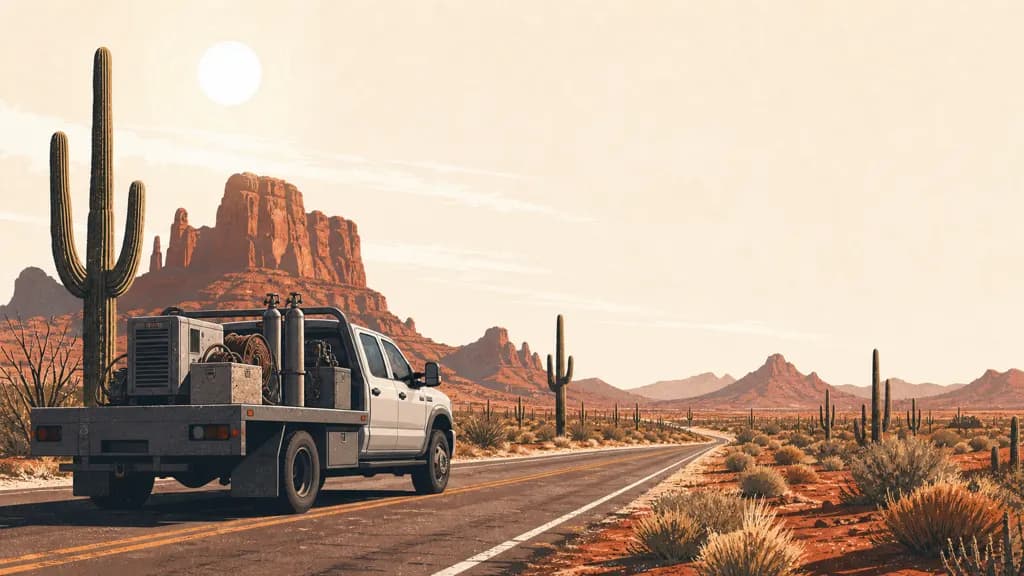
Welding in America's Hottest Metro
The Phoenix metropolitan area (spanning Phoenix, Scottsdale, Mesa, Tempe, Chandler, Gilbert, Glendale, and Peoria) is home to nearly 5 million people and one of the fastest-growing construction markets in the country. It is also one of the most challenging environments in which to perform mobile welding.
When summer temperatures routinely exceed 110 degrees Fahrenheit, metal surfaces exposed to direct sunlight can reach 150 degrees or higher. Welding on superheated metal changes everything: from arc behavior to distortion patterns to the welder's physical endurance. The Phoenix mobile welding market has adapted to these conditions in ways that are unique to the desert Southwest.
The Heat Factor: How Desert Conditions Affect Welding
Extreme heat impacts mobile welding in several practical ways that customers should understand:
Scheduling. The vast majority of mobile welding in the Phoenix area happens between 5am and 11am from May through September. By noon, metal surfaces are too hot to handle safely, the welder's risk of heat-related illness increases dramatically, and weld quality can suffer as thermal expansion makes fit-up unpredictable. If you need mobile welding in Phoenix during summer, book early-morning time slots and expect them to fill fast.
Metal expansion. Steel expands approximately 0.0065 inches per foot for every 100 degrees Fahrenheit of temperature change. A 20-foot steel gate that was fabricated and installed in January at 60 degrees may not close properly in July at 115 degrees: a difference of over 1/8 inch in length. Experienced Phoenix welders account for thermal expansion when fabricating gates, fences, and structural components by building in expansion gaps and using slotted connections where appropriate.
UV and corrosion. While Phoenix does not have the salt-air corrosion issues of coastal cities, the intense UV radiation degrades paint and powder coat finishes faster than in moderate climates. Mobile welders in the Valley often recommend marine-grade powder coating or high-UV-resistant paint systems for exterior metalwork.
Welder safety. OSHA guidelines recommend limiting heavy physical work in temperatures above 103 degrees Fahrenheit. Professional mobile welders in Phoenix carry extra water, electrolyte supplements, shade canopies, and cooling towels. Many rigs are equipped with misting systems. A responsible welder will decline or reschedule afternoon work during extreme heat events rather than risk heat stroke.
Pool Fence Welding: A Phoenix Staple
Arizona law (specifically the Maricopa County Swimming Pool Barrier Ordinance and the International Swimming Pool and Spa Code as adopted by the City of Phoenix) requires physical barriers around residential swimming pools. With an estimated 250,000 residential pools in the Phoenix metro, pool fence installation and repair is one of the most common mobile welding jobs in the Valley.
Pool fence welding in Phoenix involves:
- Wrought-iron and tubular steel fence installation. Most Phoenix pool fences are fabricated from 1" square or round tubular steel with vertical pickets spaced no more than 4 inches apart (per code). Panels are typically welded to steel posts set in concrete footings.
- Self-closing gate mechanisms. Pool fence gates must be self-closing and self-latching per Arizona code, with the latch at least 54 inches above grade. Mobile welders install and repair these mechanisms regularly.
- Fence repair and modification. Existing pool fences sustain damage from landscaping equipment, weather events, and normal wear. Replacing bent pickets, re-welding cracked connections, and modifying fence lines for pool remodels are steady work.
- Code compliance upgrades. Older homes may have pool fences that do not meet current code. When a home is sold, the inspection often flags non-compliant pool barriers, generating urgent welding work to bring the fence up to standard before closing.
RV and Trailer Repair
Arizona is one of the top RV ownership states in the country, and the Phoenix metro is a major hub for RV storage, service, and travel. The combination of a large retiree population, proximity to premier RV destinations (Sedona, Lake Pleasant, the White Mountains), and year-round travel weather creates strong demand for mobile welding on recreational vehicles and trailers.
Common RV and trailer welding jobs include:
- Cracked or bent trailer frames and tongue assemblies
- RV chassis and underbody structural repairs
- Hitch and receiver modifications (fifth wheel, gooseneck conversions)
- Aluminum welding on RV exterior panels and trim (requires TIG capability)
- Custom cargo and toy hauler modifications
- Awning bracket and mounting hardware repairs
Arizona Contractor Licensing (AZ ROC)
Arizona has one of the more structured contractor licensing systems in the country, administered by the Arizona Registrar of Contractors (AZ ROC). Mobile welders in Phoenix need to understand how this system applies to their work:
- AZ ROC licensing. Welding work that is part of a construction project (structural steel, building modifications, fence installation) generally requires the welder to hold or work under an AZ ROC contractor license. The relevant license classifications include C-49 (Ornamental Iron), C-63 (Steel, Including Structural and Reinforcing), and CR-49/CR-63 for residential equivalents.
- Exempt work. Minor repair work under certain dollar thresholds may be exempt from AZ ROC licensing, but the thresholds are low and the penalties for unlicensed contracting in Arizona are stiff: up to $2,500 per offense and potential criminal misdemeanor charges.
- Insurance requirements. AZ ROC requires licensed contractors to carry general liability insurance and workers' compensation coverage. This protects the customer and is a reliable indicator of a professional operation.
- Permit requirements. The City of Phoenix and most Valley municipalities require building permits for structural welding, fence installation (including pool fences), and significant repair work. Always confirm whether your project requires a permit before work begins.
The Phoenix Construction Surge
Like DFW, the Phoenix metro is experiencing a sustained construction boom. Semiconductor manufacturing facilities (TSMC, Intel), large-scale distribution centers, residential master-planned communities, and commercial developments across the East Valley and West Valley are driving enormous demand for welding labor.
Mobile welders who hold AWS D1.1 structural certification are in particularly high demand for:
- Steel-frame commercial buildings and warehouses
- Equipment and machinery installation in manufacturing facilities
- Structural steel repairs at existing industrial properties
- Handrail, guardrail, and bollard installation at commercial sites
What Mobile Welding Costs in Phoenix
The Phoenix market is moderately priced compared to coastal metros:
- Hourly rates: $80-$135/hour for general mobile welding; $120-$185/hour for certified or specialty work
- Service call minimums: $175-$275
- Common job ranges: Pool fence repair $200-$600; pool fence panel installation $400-$1,200; gate fabrication and install $1,500-$5,000; RV/trailer repair $250-$700; structural steel $500-$2,500+
Summer scheduling premiums are common. Some welders charge 10-20% more for summer work to account for the reduced productive hours and the physical toll of working in extreme heat.
Finding a WeldRunners in Phoenix
The Valley's sprawl (over 50 miles from Buckeye to Apache Junction) means proximity matters. A welder based in Surprise is a long drive from a job in Gilbert. WeldRunners lists mobile welders by location across the Phoenix metro, from Anthem to Maricopa. Ask the provider for current AZ ROC licensing information and job-specific references, and consider early-morning scheduling if summer is approaching.